

From Samudra Manthan to Simhastha: The Glorious Saga of the Kumbh Mela
The sacred tradition of Nashik, Prayagraj, Haridwar, and Ujjain
Kumbh Mela is one of the oldest living traditions of humanity and one of the largest peaceful gatherings in the world. Deeply rooted in India's spiritual philosophy and cultural heritage, it represents the eternal values of faith, knowledge, devotion, service, and social harmony. For centuries, saints, sages, scholars, pilgrims, and seekers have gathered at sacred riverbanks to exchange wisdom, pursue spiritual growth, and celebrate the timeless traditions of Indian civilization.
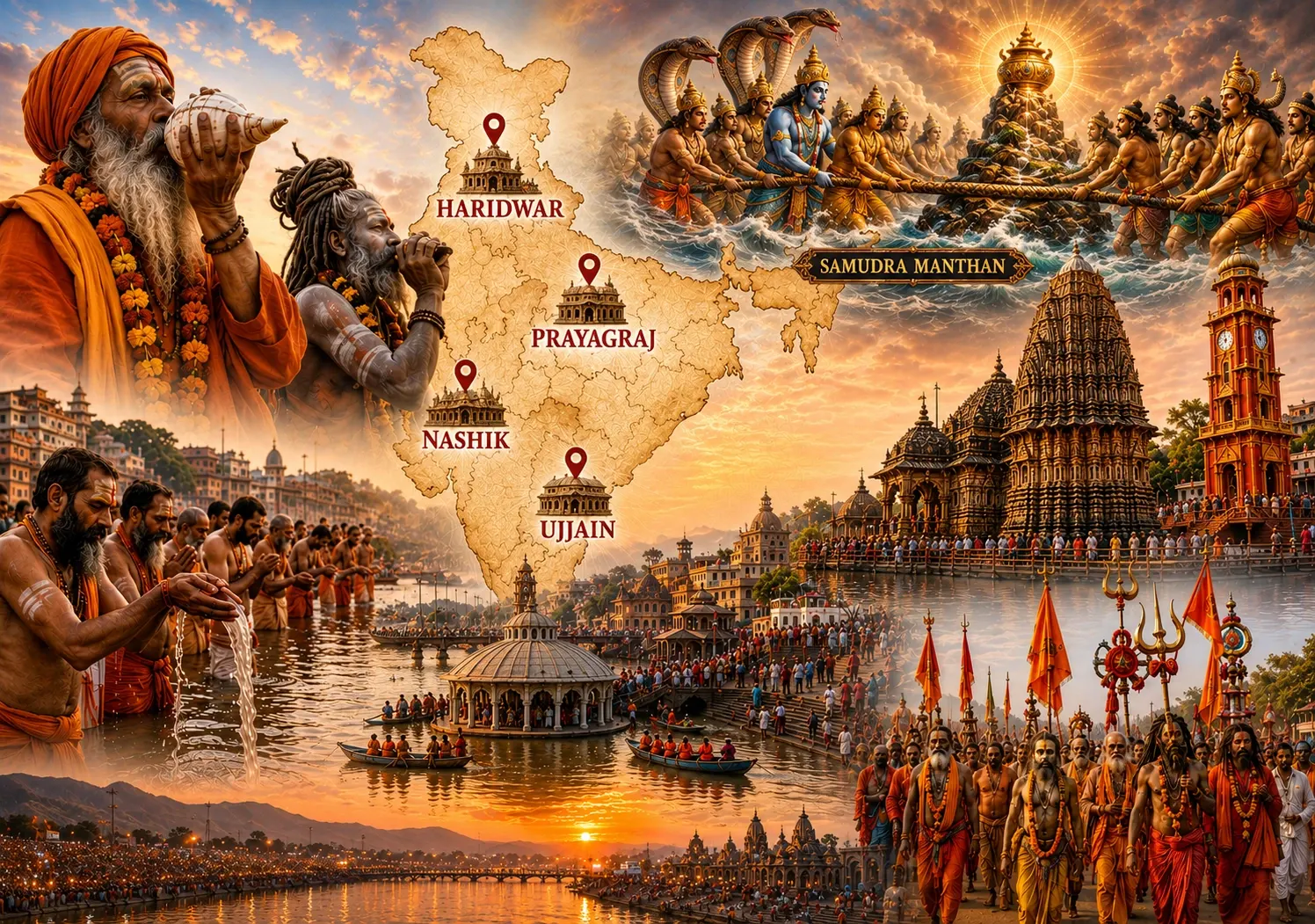
The spiritual origins of Kumbh Mela are linked to the legendary Samudra Manthan (Churning of the Ocean). According to Hindu mythology, gods and demons joined forces to obtain Amrit, the nectar of immortality. During the ensuing struggle, drops of the divine nectar fell at four sacred locations—Prayagraj, Haridwar, Ujjain, and Nashik. These sites became the four sacred destinations where Kumbh Mela continues to be celebrated.
Kumbh Mela is much more than a ritual bath. It is a vibrant platform for spiritual discourse, cultural exchange, meditation, yoga, community service, philosophical discussions, and the preservation of saint traditions. It brings together diverse communities and traditions, reflecting the vastness and inclusiveness of Indian spirituality.
The festival's most iconic event is the Shahi Snan (Royal Bath), where saints, ascetics, and devotees take a holy dip in the sacred river during astrologically significant moments. The grand processions of Akhadas, accompanied by chants, conch shells, traditional music, and spiritual fervor, create a breathtaking spectacle that symbolizes the spiritual grandeur of Kumbh.
Kumbh Mela is a living expression of the Indian philosophy of "Vasudhaiva Kutumbakam" (The World is One Family). Millions of people from different regions, languages, cultures and backgrounds come together with a shared spiritual purpose, creating one of the world's most remarkable examples of unity in diversity.
Recognizing its extraordinary cultural significance, UNESCO inscribed Kumbh Mela on the Representative List of the Intangible Cultural Heritage of Humanity in 2017. Today, Kumbh Mela continues to inspire millions while showcasing India's timeless spiritual wisdom and cultural richness to the world.